How to Become a Flight Attendant
The training that certifies you usually comes from the airline that hires you, which changes how you prepare and what you apply with.
Quick answer
- Fastest path: apply directly to an airline with a secondary school diploma and customer-facing experience, then complete its paid or employer-run initial training — no pre-hire course is needed for FAA certification (U.S. Bureau of Labor Statistics, 2025).
- Typical timeline: recruitment runs weeks to months, initial training runs a number of weeks of classroom work and hands-on simulation (ZipRecruiter), and most new hires then spend a probation period on reserve.
- Minimum credential: a secondary school diploma plus the employer's completed initial training and exam; in the US that produces the FAA Certificate of Demonstrated Proficiency, which requires recurrent training every year (U.S. Bureau of Labor Statistics, 2025).
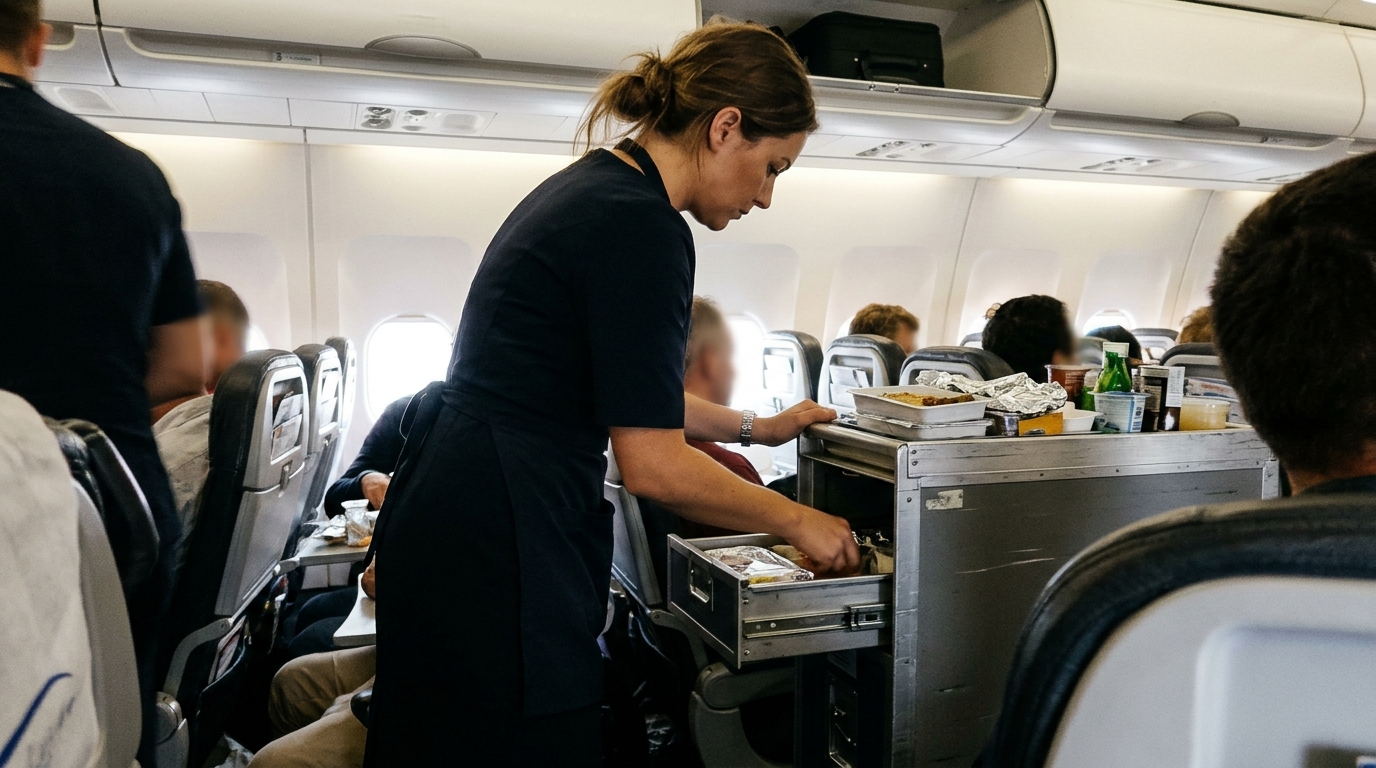
To become a flight attendant you meet an airline's entry requirements, get hired, then complete that airline's own initial training and pass its exam. In the United States, certification by the Federal Aviation Administration comes through employer-provided training rather than a separate pre-hire school (U.S. Bureau of Labor Statistics, 2025), and many carriers elsewhere follow the same pattern under their own national regulator.
That means the hard part is usually recruitment, not study. Before you apply, you need to clear baseline checks — age, work eligibility, a valid passport, a background check and a drug test (U.S. Bureau of Labor Statistics, 2025) — and be able to meet the physical standards the airline sets.
Is This Career Right for You?
This is safety work carried out in a confined cabin while standing, walking, lifting bags into overhead bins, pushing service carts and operating door and slide mechanisms. Airlines set physical standards: vision correctable to a stated standard and, often, height requirements (U.S. Bureau of Labor Statistics, 2025), and US carriers commonly add an arm-reach measurement taken standing flat-footed, within a range each airline publishes (Cabin Crew 24, 2026).
The schedule is the bigger deciding factor. Attendants fly a set range of hours each month and add ground hours preparing flights, filing reports and waiting on delayed aircraft (U.S. Bureau of Labor Statistics), with individual duty periods running from a short shift to a very long one (Assessment.com, citing the Bureau of Labor Statistics). Federal rules require a minimum rest period after a duty period before the next one (U.S. Bureau of Labor Statistics). You are away from your home base for a significant share of your working time (EBSCO), and in a government worker survey a large majority of flight attendants described their schedule as irregular rather than regular (O*NET, 2026).
It suits people who can sleep in hotels and crew rooms, stay composed during medical events and passenger conflict, and accept working nights, weekends and holidays, especially in the first years when seniority decides your roster. It does not suit people who need fixed weekends at home, who have caring duties requiring every evening, or who cannot meet the reach, vision or height standards an airline sets.
Steps to Becoming a Flight Attendant
- Check baseline eligibility before you spend anything. Airlines require applicants to meet a minimum age, typically 18 or 21, be eligible to work in the country, hold a valid passport, and pass a background check and drug test (U.S. Bureau of Labor Statistics, 2025). Passport fees are set by your government; allow weeks for processing.
- Finish secondary school, and consider targeted coursework. A diploma is the baseline. Some airlines prefer candidates with additional post-secondary coursework in fields such as hospitality, communications or travel (Aviation Job Search) — usually one to two years of study, at tuition rates set by the institution.
- Build customer-facing experience. Six to twelve months or more in hospitality, retail, healthcare or any role handling complaints and safety-sensitive procedures gives you the examples recruiters ask for at assessment day. It costs nothing but time.
- Confirm you can meet the physical standards. Measure your flat-footed reach against the airline's published range (Cabin Crew 24, 2026) and check its vision and height requirements (U.S. Bureau of Labor Statistics, 2025) before you apply, not after.
- Apply and work through recruitment. Expect an online application, a recorded video interview, then a group assessment day and a one-to-one interview. The process typically runs weeks to months; you may pay your own travel to assessment days.
- Complete the employer's initial training programme. It runs a number of weeks, combining classroom instruction with hands-on simulation of evacuations, firefighting, ditching and medical response (ZipRecruiter). Whether you are paid during training, and whether lodging is provided, varies by airline.
- Pass the exam and get certified. In the US you must complete the employer's approved programme and pass an exam to hold the FAA Certificate of Demonstrated Proficiency, required for crew on US-registered aircraft (U.S. Bureau of Labor Statistics, 2025; ZipRecruiter). Certification is split by aircraft type, with trainees completing Group 1, Group 2 or both depending on the aircraft they will work (GetAirlineCareer). The underlying law covers crew working in the cabin of aircraft above a stated seat count operated by Part 121 or Part 135 carriers (LiveAbout).
- Fly probation and reserve. Entry-level attendants are usually on reserve: on call, assigned trips at short notice, working the galley and cabin positions nobody senior bid for. Experienced attendants bid preferred routes and layovers by seniority, work purser or lead positions, handle paperwork for the cabin crew and brief new hires.
- Keep and extend the certificate. Recurrent training is required every year to keep certification (U.S. Bureau of Labor Statistics, 2025). From there, advancement runs toward purser, in-flight trainer, recruiter, base supervisor or safety and standards roles — usually several years in, and usually tied to seniority.
Education and Certification Options
Costs below vary by country, airline and provider — confirm current fees with the institution or regulator before paying anything.
| Path | Typical time | Approximate cost | Required or preferred |
|---|---|---|---|
| Secondary school diploma | Standard school leaving | None beyond schooling | Required as the baseline by most airlines (Aviation Job Search) |
| Post-secondary coursework in hospitality, communications or travel | One to two years | Tuition set by the institution | Preferred by some airlines, not a legal requirement (Aviation Job Search) |
| Private pre-hire cabin crew course | Varies by provider | Fees set by the provider | Not required — in the US, certification comes from employer-provided training, not a separate pre-hire programme (U.S. Bureau of Labor Statistics, 2025) |
| Airline initial training programme | A number of weeks of classroom and hands-on simulation (ZipRecruiter) | Run by the employer; pay and lodging during training vary by airline | Required — you cannot fly the line without completing it and passing the exam |
| FAA Certificate of Demonstrated Proficiency (US-registered aircraft) | Issued on completing the airline's approved programme and passing its exam | No separate tuition; tied to the employer programme | Required for crew on US-registered aircraft (ZipRecruiter) |
| Aircraft-type qualification, Group 1 and/or Group 2 | Added to initial or recurrent training | Employer-funded | Required for the aircraft types you are assigned (GetAirlineCareer) |
| Annual recurrent training | Every year | Employer-provided | Required to keep certification (U.S. Bureau of Labor Statistics, 2025) |
Outside the United States the same structure usually applies under a different regulator and a different certificate name — check your national civil aviation authority for the exact credential before enrolling in anything.
Where to Find Flight Attendant Jobs
- Airline careers portals and talent pools. Most carriers hire only through their own site and open applications in windows. Register for alerts so you see a window the week it opens rather than after it closes.
- Open days and assessment days. Carriers run recruitment events in cities where they are expanding a base. These are advertised on the airline's careers page and are often the only route into a given base.
- Regional and feeder carriers. Short-haul operators flying under Part 121 or Part 135 rules in the US, and their equivalents elsewhere (LiveAbout), hire more often than flagship carriers and are the most common first employer.
- Charter, corporate and VIP operators. Smaller cabins, fewer crew per aircraft, often based at business aviation terminals rather than main passenger airports. Hiring is irregular and frequently via word of mouth at the base.
- Specialist aviation job boards. Sites focused on aviation and cabin crew hiring — for example Aviation Job Search and Cabin Crew 24 — list openings and carry airline-specific requirement details that generic boards omit.
- Cabin crew unions and professional associations in your country. They publish base openings, contract terms and recall lists, and are the clearest source on what the job actually pays at a given carrier.
- Airport ground roles as a stepping stone. Gate agent, ramp and customer service jobs with an airline or its handling contractor give you internal transfer rights and airline experience recruiters recognise.
- Seasonal and contract flying. Holiday charter airlines and ACMI operators recruit for peak seasons, which can be a faster first contract if you can relocate for a few months.
Frequently asked questions
Do I need to pay for a flight attendant school before applying?
Not in the United States. Flight attendants are certified by the Federal Aviation Administration and receive employer-provided training rather than attending a separate pre-hire programme (U.S. Bureau of Labor Statistics, 2025). Private courses exist and may help you prepare for an assessment day, but no airline will accept one in place of its own initial training. Check your national aviation authority before paying a provider that implies otherwise.
How old do I have to be, and what checks will I face?
Airlines set a minimum age, typically 18 or 21 depending on the carrier and the routes it flies. You must also be eligible to work in the country, hold a valid passport, and pass a background check and a drug test (U.S. Bureau of Labor Statistics, 2025). The depth of the background check — criminal record, employment history, residency history — is set by the regulator and the airline, so ask the recruiter what period they verify.
How long does it take from first application to flying?
Recruitment commonly runs weeks to months across the online application, video interview and assessment day. Initial training then runs a number of weeks of classroom instruction and hands-on simulation (ZipRecruiter), ending in the exam that produces your certificate. Most new hires then spend a probation period on reserve before bidding a regular line.
What do flight attendants get paid?
Pay is usually structured as an hourly flight rate that starts when the aircraft door closes, plus a per diem for time away from base, and often a monthly minimum guarantee — so ground time waiting for aircraft is paid differently from flying time. Rates rise sharply with seniority and vary by airline, contract and country. Check current figures with your national statistics agency: the Bureau of Labor Statistics in the US, the Office for National Statistics in the UK, Statistics Canada, or the Australian Bureau of Statistics.
Is the occupation growing?
Projected employment growth for flight attendants is described as much faster than the average for all occupations over the coming decade (U.S. Bureau of Labor Statistics, 2025). That projection covers the US only; hiring elsewhere depends on your national carriers' fleet plans. Competition for named flagship airlines stays heavy regardless of the projection, which is why regional and charter operators are the usual entry point.
Sources
- U.S. Bureau of Labor Statistics — Flight Attendants : Occupational Outlook Handbook (2025)
- U.S. Bureau of Labor Statistics — Flight Attendants : Occupational Outlook Handbook (cached edition)

Written by
Wyatt covers work outside the office: construction, logistics, repair, and the people who keep things running. He's skeptical of career advice that assumes everyone sits at a desk.