
Career Paths
Career Paths guides on Career Atlas HQ.

How to Become a Wind Turbine Technician: Step-by-Step Guide
Wind turbine service technicians, often called windtechs, maintain and repair turbines: inspecting tower integrity, climbing to the nacelle, running routine maintenance and troubleshooting electrical, mechanical and hydraulic systems, as well as assisting engineers and ironworkers installing new turbines (U.S. Bureau of Labor Statistics, 2025). The usual way in is a postsecondary nondegree award — a wind energy technology certificate from a technical school or community college — followed by employer- or manufacturer-provided on-the-job training (U.S. Bureau of Labor Statistics, 2025).
Noor Abdallah · 9 min read
How to Become a Commercial Airline Pilot: Step-by-Step Guide
Becoming a commercial airline pilot means collecting a fixed stack of licences in a set order, passing a strict medical, and building flight hours until you meet the minimum for airline operations. In the United States that stack runs student pilot certificate, private pilot certificate, instrument rating, commercial pilot certificate, multi-engine rating, then airline transport pilot (ATP) certificate (U.S. Bureau of Labor Statistics, 2025). Europe, and countries that follow EASA or ICAO rules, use different licence names and an alternative cadet route, but the same logic applies.
Desmond Okafor · 11 min read
What Does a Dietitian Do? Duties, Skills, and Salary Explained
A dietitian assesses what people need to eat, builds a plan around their medical condition and circumstances, counsels them through it, and tracks whether it works. The U.S. Bureau of Labor Statistics (2025) lists those four duties — assessing nutritional needs, counselling, developing meal plans and evaluating outcomes — as the core of the occupation, carried out in hospitals, nursing homes, clinics, cafeterias and government public health programmes.
Priya Chandrasekaran · 9 min read
How to Become a Police Officer: Step-by-Step Guide
Becoming a police officer means clearing a hiring process rather than simply finishing a course: an application, a written exam, fitness and medical screening, a background investigation, and then an academy you must graduate from before you can work. In the United States, applicants need at least a high school diploma or equivalent, though some federal agencies and departments ask for college coursework or a degree, and candidates usually must be at least 21 and meet rigorous physical and personal qualifications (U.S. Bureau of Labor Statistics, 2025).
Desmond Okafor · 10 min read
What Does an Actuary Do? Duties, Skills, and Salary Explained
An actuary uses mathematics, statistics and financial theory to analyse the economic cost of risk and uncertainty (U.S. Bureau of Labor Statistics, 2025). In practice that means estimating how likely events such as death, sickness, accident or natural disaster are, pricing insurance policies around them, working out the cash reserves an insurer needs, and explaining the results to executives, regulators, shareholders and clients (U.S. Bureau of Labor Statistics, 2025).
Marisol Tanaka-Reyes · 9 min read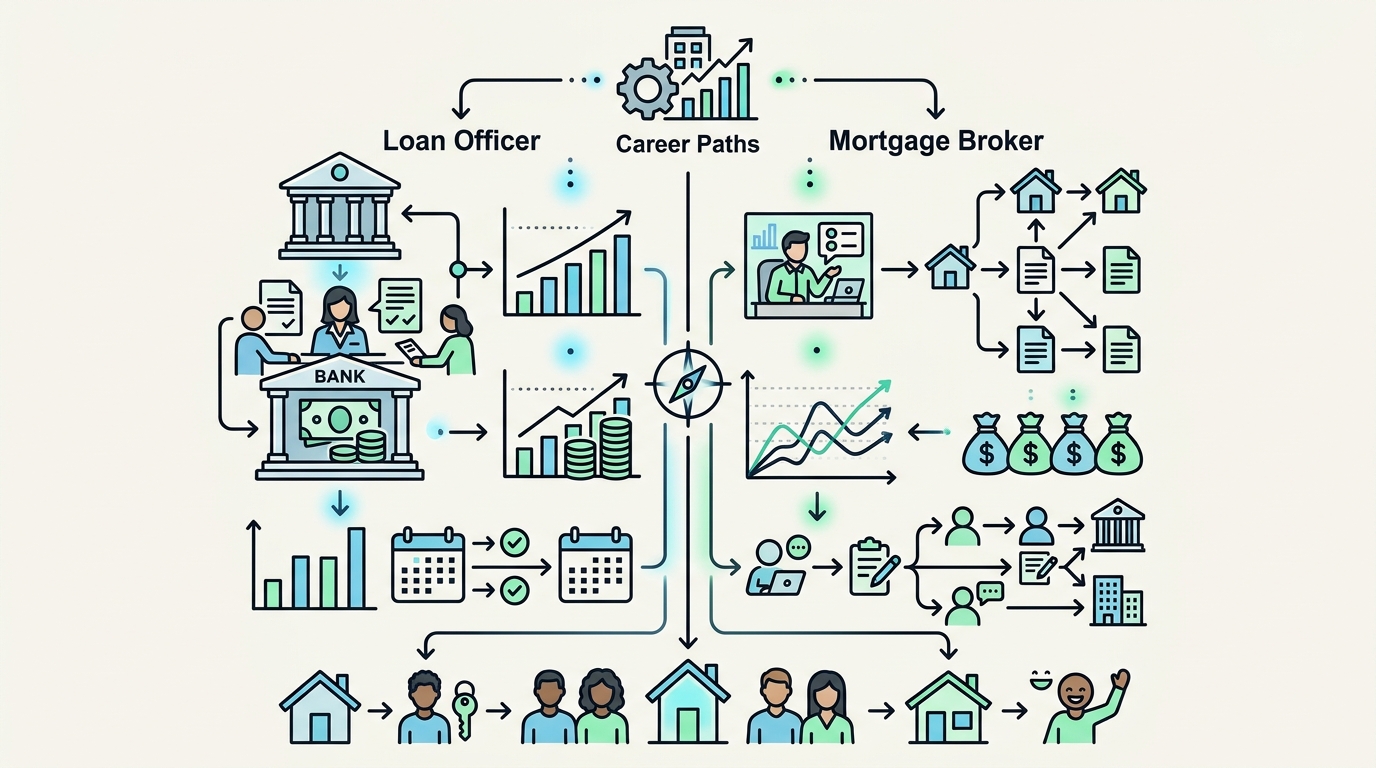
Loan Officer vs. Mortgage Broker: Pay, Duties, and Day-to-Day Differences
A loan officer works for one lender and sells that lender's loan products, verifying applicants' finances and approving or referring files against in-house criteria. A mortgage broker is an intermediary: the borrower is the client, but the loan comes from whichever lender on the broker's panel will take the file, and the broker is paid per completed deal rather than on a salary line.
Wyatt Holloway · 9 min read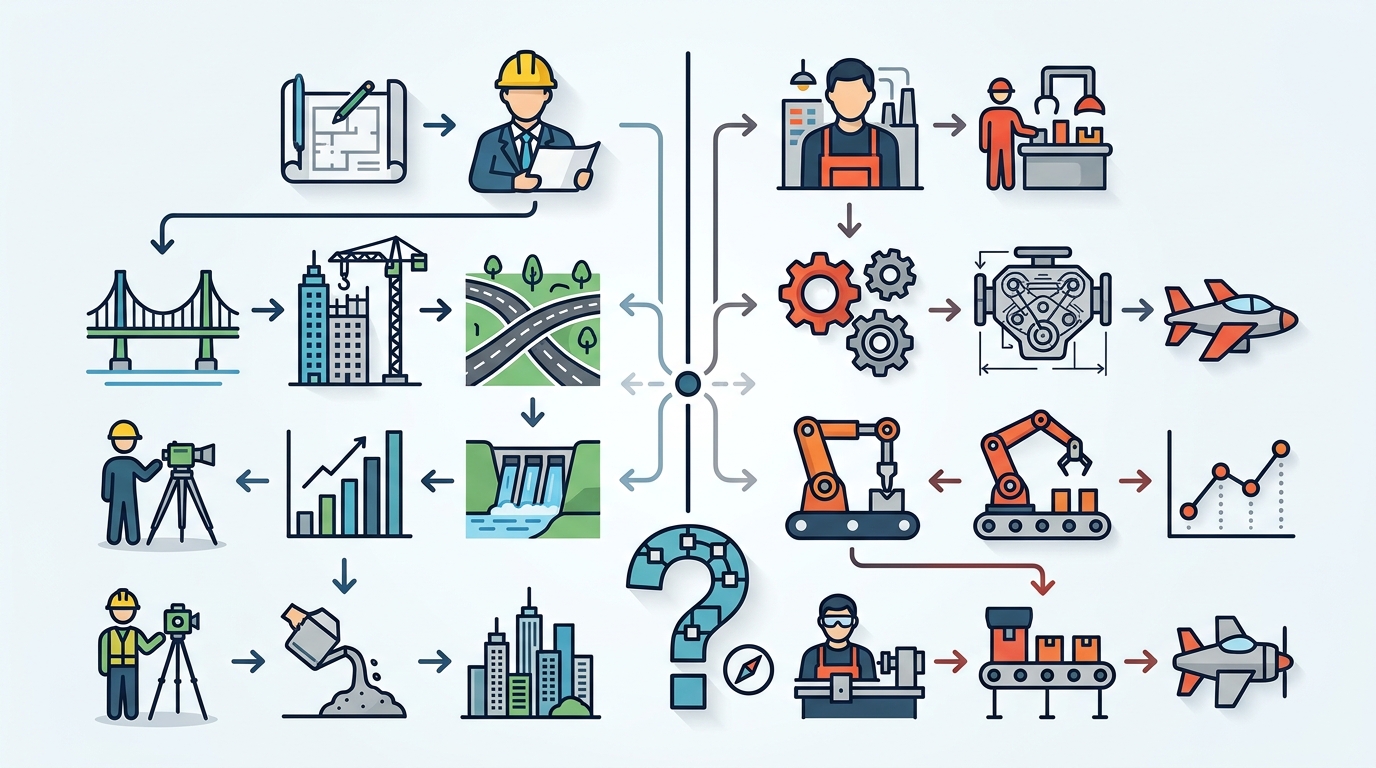
Civil Engineer vs. Mechanical Engineer: Which Career Path Is Right for You?
Civil and mechanical engineering both start from the same place — an accredited four-year bachelor's degree (U.S. Bureau of Labor Statistics, 2025) — but they diverge sharply once you're working. Civil engineers split their time between an office and construction sites and handle permits, surveying and cost estimates; mechanical engineers work mainly in offices and labs designing, prototyping and testing devices, visiting worksites only when a piece of equipment needs them in person (U.S. Bureau of Labor Statistics, 2025).
Marisol Tanaka-Reyes · 10 min read
What Does a Chef Do? Duties, Skills, and Salary Explained
A chef runs the food side of a kitchen: planning menus, developing recipes, checking the freshness of ingredients, supervising cooks and monitoring sanitation practices (U.S. Bureau of Labor Statistics, 2025). The title covers everything from a sous chef who is the kitchen's second-in-command to a head chef who owns the menu, the costs and the standards (U.S. Bureau of Labor Statistics, 2025).
Marisol Tanaka-Reyes · 9 min readCareer PathsWhat Does a Speech-Language Pathologist Do? A Day in the Life
Speech-language pathologists assess and treat people who have trouble with speech, language, voice, fluency or swallowing — from toddlers who aren't talking yet to stroke patients relearning how to eat safely. Most of the day is spent in direct therapy sessions and evaluations, with a substantial block of documentation attached to each one.
Noor Abdallah · 8 min read
How to Become an Air Traffic Controller: Step-by-Step Guide
Air traffic control is a licensed, heavily screened occupation: you enter through a national aviation authority or one of its approved training providers, not by applying to an airport directly. The usual path is an aptitude test, a medical certificate and a security investigation, followed by months of classroom qualification training and then a long stretch of supervised on-the-job training at the facility where you will actually work.
Wyatt Holloway · 10 min read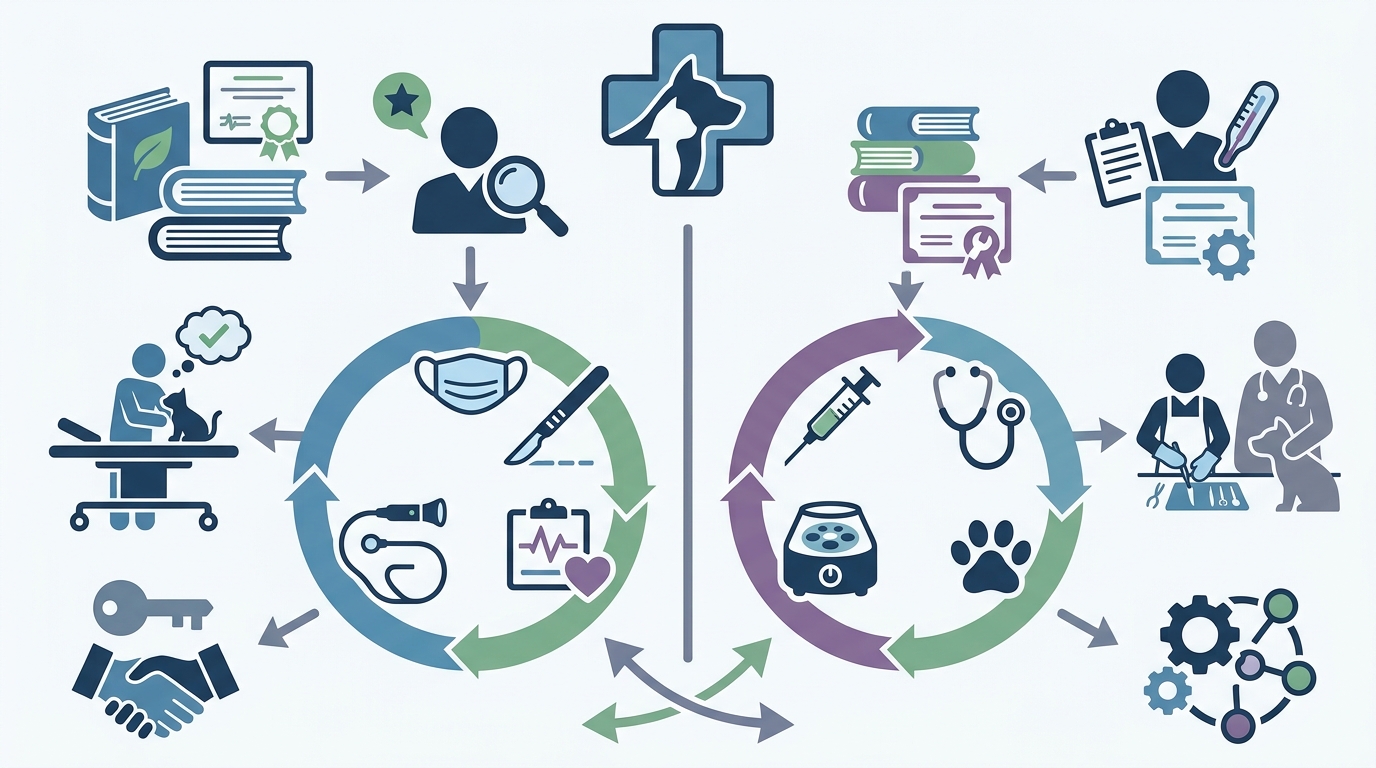
Veterinarian vs. Veterinary Technician: Which Career Path Is Right for You?
Veterinarians diagnose, prescribe and operate; veterinary technicians run the anaesthesia, the lab work and the nursing care that make those decisions possible. The biggest practical difference is the entry cost: a veterinarian needs a doctoral or professional degree, usually a four-year veterinary programme on top of prior study, while a technician typically enters with a two-year associate's degree (U.S. Bureau of Labor Statistics, 2025).
Priya Chandrasekaran · 9 min read