How to Become a Police Officer: Step-by-Step Guide
From the written civil service exam and background investigation to academy graduation and field training, here is what each hiring stage actually asks of you.
Quick answer
- Minimum credential in the U.S. is a high school diploma or equivalent plus graduation from the agency's training academy, with on-the-job training afterwards (U.S. Bureau of Labor Statistics, 2025).
- Realistic time from starting an application to working as a sworn officer is roughly 12 to 24 months in many U.S. jurisdictions; degree-based routes in England and Wales take about two to three years (College of Policing, 2024).
- Most candidates must be at least 21 and meet rigorous physical and personal qualifications, and a felony conviction or drug use may disqualify you (U.S. Bureau of Labor Statistics, 2025).
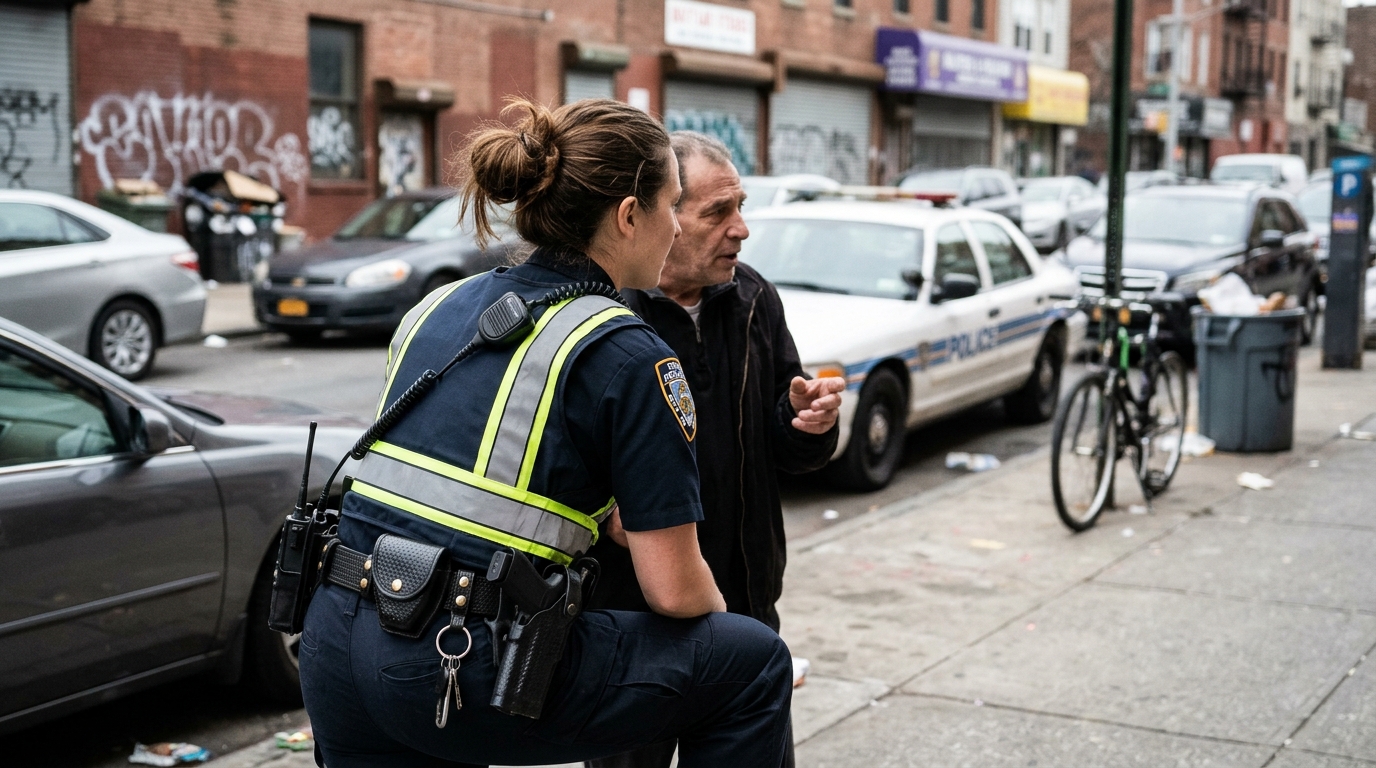
Becoming a police officer means clearing a hiring process rather than simply finishing a course: an application, a written exam, fitness and medical screening, a background investigation, and then an academy you must graduate from before you can work. In the United States, applicants need at least a high school diploma or equivalent, though some federal agencies and departments ask for college coursework or a degree, and candidates usually must be at least 21 and meet rigorous physical and personal qualifications (U.S. Bureau of Labor Statistics, 2025).
The detail changes a great deal by country, state and individual agency. This guide sets out the sequence that most jurisdictions follow, names the routes that exist, and tells you where to check the rules that apply where you want to serve.
Step-by-Step Path to Entry
- Check that you meet the baseline eligibility rules of the agency you want to join. Candidates must usually be at least 21, hold a high school diploma or GED, possess a valid driver's license, and be a U.S. citizen (owlbadges.com). Most states and local jurisdictions require citizenship, but some do not; federal officers must be U.S. citizens (U.S. Bureau of Labor Statistics, 2025). If you are under the minimum age, look for a department cadet program — cadet candidates usually must be at least 18, have a driver's license, and meet specific physical qualifications (U.S. Bureau of Labor Statistics, 2025).
- Choose your entry route for your country. In the U.S. you apply directly to a municipal, county, state or federal agency. In England and Wales there are four approved routes: the police constable degree apprenticeship (PCDA), a degree in professional policing (PPD), the degree-holder entry programme (DHEP), and the police constable entry programme (PCEP), added from 1 April 2024 (College of Policing, 2024).
- Register for and pass the written entrance or civil service examination. These are scheduled, not on demand — Colonie Police Officer candidates, for example, must take a New York State written civil service examination held once every three years (Town of Colonie, New York). Pass marks are published: the Grandview Heights, Ohio Civil Service Commission requires an average weighted score of at least 70% to pass the written police officer exam (2023).
- Clear the physical ability test, medical screening and psychological evaluation. Standards are set by the state's standards and training commission or the individual agency; read the published test description before you train for it.
- Complete the background investigation and interview stages. Candidates typically go through a series of interviews and may be asked to take polygraph (lie detector) and drug tests as part of hiring (U.S. Bureau of Labor Statistics, 2025). A felony conviction or drug use may disqualify a candidate (U.S. Bureau of Labor Statistics, 2025).
- Graduate from the training academy. Most police and detectives must graduate from their agency's training academy before completing a period of on-the-job training (U.S. Bureau of Labor Statistics, 2025). In California, commission regulations require successful completion of a POST-certified Basic Course, commonly called an academy, for every newly-appointed peace officer of participating agencies (California Commission on Peace Officer Standards and Training).
- Complete field training and probation as a sworn officer. In the U.S., recruits spend six months paired with training officers after the academy (CBS News). Only after this are you normally assigned to solo patrol.
Education and Certification Options
Costs below are deliberately unpriced because tuition and academy fees are set locally; check the published fee schedule of the specific college, academy or force.
| Route | Typical duration | Approximate cost | Required or preferred |
|---|---|---|---|
| High school diploma or GED, then agency academy (U.S.) | Secondary school, plus an academy of 10 to 36 weeks (CBS News) | Public secondary schooling; many agencies hire and pay recruits through the academy — confirm with the agency | Required minimum at most departments (U.S. Bureau of Labor Statistics, 2025); 42% of police and sheriff's patrol officer respondents said a high school diploma or equivalent is required for entry (O*NET OnLine) |
| Associate's or other two-year degree, often criminal justice | About 2 years full time | Community college tuition and fees as published by the institution | Required by some agencies — 33% of respondents reported an associate's or other 2-year degree is required for entry (O*NET OnLine) |
| Bachelor's degree | About 3 to 4 years | University tuition and fees as published | Some federal agencies and police departments require college coursework or a degree (U.S. Bureau of Labor Statistics, 2025); a bachelor's degree may be required for advancement to lieutenant or higher rank (same source) |
| Department cadet program (under minimum age) | Runs until you reach the age requirement | Usually a paid or stipended trainee post rather than tuition | Optional pathway; requires age 18+, a driver's license and specific physical qualifications (U.S. Bureau of Labor Statistics, 2025) |
| Police constable degree apprenticeship (PCDA), England and Wales | Typically about 3 years, employed and studying | Employed route — you are paid rather than charged tuition | One of the approved routes into policing (College of Policing, 2024) |
| Degree in professional policing (PPD), England and Wales | Typically 3 years before applying | University tuition as published | Approved pre-join route; you still apply to a force and pass selection (College of Policing, 2024) |
| Degree-holder entry programme (DHEP) or police constable entry programme (PCEP), England and Wales | Set by the force; PCEP available from 1 April 2024 | Employed routes | Approved routes (College of Policing, 2024) |
| POST-certified Basic Course, California | Academy training typically 12 to 24 weeks (East Carolina University Online Programs); 12 to 27 weeks depending on state and agency (Police1) | Agency-sponsored or self-sponsored — check the academy's published terms | Required for every newly-appointed peace officer at participating agencies (California POST) |
Are You Ready? Readiness Checklist
Work through these before you spend money on a course or book an exam date.
- You will be at least 21 by the hiring date, or at least 18 and able to apply to a cadet program instead (U.S. Bureau of Labor Statistics, 2025).
- You hold a high school diploma or GED, and a valid driver's license (owlbadges.com).
- You meet the citizenship or residency rule for your target agency — most states and local jurisdictions require U.S. citizenship, some do not, and federal officers must be U.S. citizens (U.S. Bureau of Labor Statistics, 2025).
- Your record will survive a background investigation: a felony conviction or drug use may disqualify a candidate (U.S. Bureau of Labor Statistics, 2025).
- You are prepared to sit a polygraph and a drug test and to answer detailed personal questions in a series of interviews (U.S. Bureau of Labor Statistics, 2025).
- You have read the agency's published physical ability standards and can currently meet them, or have a dated training plan to get there.
- You have found the next scheduled written exam. Some are infrequent — the New York State written civil service examination used by Colonie is held once every three years (Town of Colonie, New York) — and you know the pass mark, such as the 70% average weighted score required by the Grandview Heights, Ohio Civil Service Commission (2023).
- You accept the tradeoffs: shift work including nights, weekends and holidays, court appearances on days off, exposure to violence and distressing scenes, and a probationary field training period of around six months under constant assessment (CBS News).
Typical Timeline From Start to First Job
Elapsed times below assume a direct-entry U.S. application. Degree-based routes add the length of the degree, and England and Wales timings follow the route you pick (College of Policing, 2024).
- Month 0: Confirm age, education, licence and citizenship eligibility, and register for the next written civil service or entrance examination. Build the exam date into your plan — some are scheduled only once every three years (Town of Colonie, New York).
- Months 0-3: Sit and pass the written examination at or above the published pass mark, for example an average weighted score of at least 70% (Grandview Heights, Ohio Civil Service Commission, 2023), then complete the physical ability test.
- Months 3-9: Complete the background investigation, medical and psychological screening, interview panels, and any polygraph and drug testing (U.S. Bureau of Labor Statistics, 2025). This stage is usually the longest and least predictable.
- Months 6-15: Attend and graduate the academy — typically 12 to 24 weeks (East Carolina University Online Programs), 12 to 27 weeks depending on state and agency (Police1), and as few as 10 or as many as 36 weeks across the U.S. (CBS News). In California this must be a POST-certified Basic Course (California POST).
- Months 12-24: Complete roughly six months of field training paired with training officers (CBS News) and finish probation.
- End point: You are working as a sworn police officer or sheriff's patrol officer on independent patrol. Promotion to corporal, sergeant, lieutenant and captain usually follows written examination scores and on-the-job performance (U.S. Bureau of Labor Statistics, 2025).
Frequently asked questions
Can I become a police officer without a four-year degree?
In most U.S. jurisdictions, yes. Applicants need at least a high school diploma or equivalent, though some federal agencies and departments require college coursework or a degree (U.S. Bureau of Labor Statistics, 2025). For police and sheriff's patrol officers, 42% of respondents said a high school diploma or equivalent is required, and 33% said an associate's or other 2-year degree (O*NET OnLine).
How long does police academy training last?
It depends on the state and agency. Academy training typically runs 12 to 24 weeks (East Carolina University Online Programs) or 12 to 27 weeks (Police1), while across the U.S. it ranges from as few as 10 weeks to as much as 36 weeks, after which recruits spend six months paired with training officers (CBS News).
What disqualifies someone from being hired?
A felony conviction or drug use may disqualify a candidate (U.S. Bureau of Labor Statistics, 2025). Candidates typically go through a series of interviews and may be asked to take polygraph and drug tests during hiring (same source). Citizenship rules also matter: most states and local jurisdictions require U.S. citizenship, some do not, and federal officers must be U.S. citizens.
I am 19. Is there any way to start now?
Some police departments run cadet programs for people who do not yet meet the age requirement. Cadet candidates usually must be at least 18, hold a driver's license, and meet specific physical qualifications (U.S. Bureau of Labor Statistics, 2025). Contact the department directly, since cadet programs are run locally and not every agency offers one.
How is police pay structured, and where do I check it?
Officers are normally paid on a published step-and-rank scale, with additions for overtime, shift differentials and specialist assignments, and promotion to corporal, sergeant, lieutenant and captain follows written examination scores and performance (U.S. Bureau of Labor Statistics, 2025). Check the hiring agency's published pay schedule, plus your national statistics body — the U.S. Bureau of Labor Statistics, or the Office for National Statistics in the UK.
How do I become a detective later on?
Detectives typically begin their careers as police officers because they need experience in law enforcement (U.S. Bureau of Labor Statistics, 2025). So the route is the same: pass selection, graduate the academy, complete field training, then apply for investigative assignments. A bachelor's degree may also be required for advancement to lieutenant or higher rank (same source).
Sources
- U.S. Bureau of Labor Statistics — Police and Detectives : Occupational Outlook Handbook (2025)
- O*NET OnLine (U.S. Department of Labor sponsored) — 33-3051.00 - Police and Sheriff's Patrol Officers
Written by
Desmond writes about the mechanics of job searching: resumes, interviews, the long silence after applying. He's fascinated by how much of getting hired depends on luck dressed up as skill.