How to Prepare for a Call Center Interview
Call centre hiring moves fast, so walk in with printed copies, a tested route and six rehearsed stories about handling an angry customer on the line.
Quick answer
- One week out, spend 45 minutes reading the employer's own help pages and app reviews as if you were a frustrated customer, and write down three complaints you would likely hear on shift.
- Five days out, write six STAR stories — the method the UK's National Careers Service recommends for answering interview questions (National Careers Service, undated) — each with a number in the result.
- Two days out, time your actual route or test your microphone, camera and internet connection so you can arrive 15 minutes early, as Randstad UK advises for call centre interviews (Randstad UK, undated).
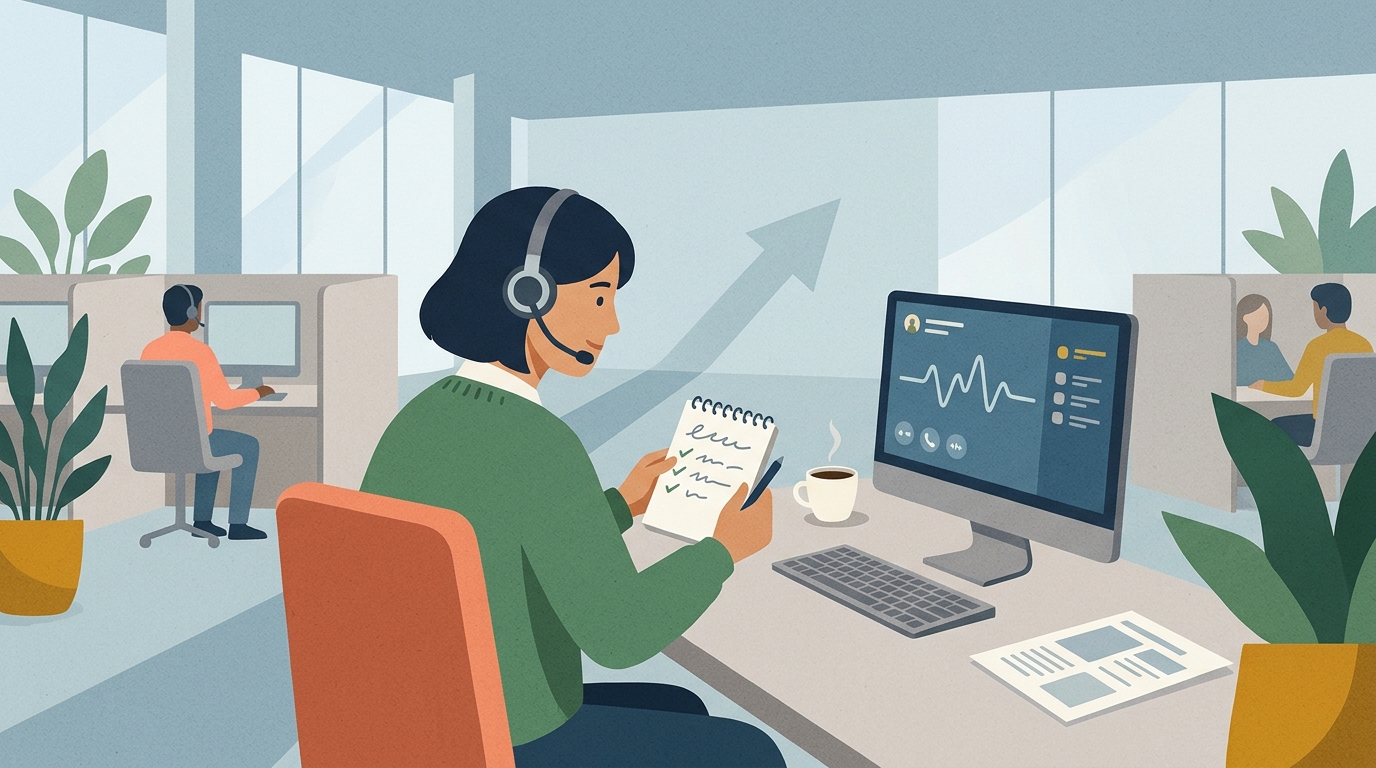
Preparing for a call centre interview comes down to three things: proving you can stay calm and clear under pressure, showing you can type, talk and click at the same time, and turning up early with your paperwork in order. Most of the work happens in the week before, not the morning of.
This guide gives you a day-by-day prep timeline, a physical checklist for the day itself, and exact wording for the moments that catch people out — the greeting, the opener, the pay question and the close.
Your Prep Timeline
- One week before — research the employer and the role (45 minutes). Read the company's public help centre, FAQ pages and recent app store or review-site replies as if you were a customer with a billing problem. Write down the three complaints that come up most; those are the calls you would take. Then read the occupation profile for Customer Service Representatives on a government careers site — ONET OnLine lists "Call Center Representative" among the reported titles for that occupation (ONET OnLine, undated) and names core tasks including keeping records of customer interactions, resolving service or billing complaints, and referring unresolved grievances to the right department (O*NET OnLine, undated). Note which of those tasks you have already done, in any job.
- Six days before — check how pay is structured, not just the number (20 minutes). Call centre pay is usually hourly or an annual salary, sometimes with shift premiums for evenings and weekends, and in sales-linked roles a bonus tied to quality scores or conversions. Rates vary by employer, industry, state and country, so check the official source for where you live — a government-funded careers site or your national statistics agency — rather than a forum figure. Note that duties and pay vary by industry: representatives may answer banking account questions, track utility outage reports, process store returns or help customers find products online (CareerOneStop, undated).
- Five days before — write six STAR stories (90 minutes). The UK's National Careers Service tells candidates to answer interview questions using the STAR method — situation, task, action, result (National Careers Service, undated). Write one each for: an angry customer, a mistake you made, a target you hit, a time you followed a script you disagreed with, a tech problem mid-task, and a dull repetitive stretch. Every result needs a number or a named outcome.
- Four days before — rehearse typing while talking (30 minutes a day for three days). Call centre interview questions probe multitasking directly — for example, "can you multi-task? typing while talking, for example?" (Randstad UK, undated). Have someone read you a fake customer complaint while you type the details into a blank document. Time yourself and note your accuracy; that gives you a concrete answer instead of "yes, I'm good at multitasking."
- Two days before — lock the logistics (30 minutes). Confirm the scheduled time in writing and set aside at least an hour for the interview, as Canada's Job Bank advises (Job Bank, undated). For in-person, research the location and check your commute time or bus route, and plan to leave early (WorkBC, undated). For online, check your computer and internet connection in advance (National Careers Service, undated) and open the meeting link once to confirm it works.
- The day before — build your folder and lay out your clothes (40 minutes). Carry a folder or envelope of interview materials (Job Bank, undated). CareerOneStop suggests bringing extra copies of your resume and references, a portfolio if relevant, documents you might need to complete an application such as work licences or ID, a pen and notebook, and questions to ask the interviewer (CareerOneStop, undated). Dress smartly (Randstad UK, undated) and hang the outfit up tonight.
- The morning of — 20-minute voice and notes warm-up. Read your six STAR stories aloud once, standing up, so your voice is warm before you speak. Then read your three questions for the interviewer. Leave so that you arrive 15 minutes early for an in-person interview — arriving later than that is considered late (SkillsCouter, undated).
Day-Of Checklist
Work down this list and physically confirm each one before you leave:
- Three printed copies of your resume and one page of references, in a folder or envelope (Job Bank, undated; CareerOneStop, undated).
- Photo ID and any licences or documents an application form might ask for, in the same folder (CareerOneStop, undated).
- A pen and a notebook with your three questions for the interviewer already written on the first page (CareerOneStop, undated).
- The interviewer's name, the room or desk number, and a phone number for the office, written on paper as well as saved in your phone.
- Route timed door to door, with the departure time set as a phone alarm, allowing you to arrive 15 minutes before the scheduled time (Randstad UK, undated).
- For an online interview: camera, microphone and internet connection tested, link opened once, and your laptop plugged in — be ready to start 5 to 10 minutes early (National Careers Service, undated).
- Outfit laid out, pressed and checked for marks the night before; dress smartly (Randstad UK, undated).
- Phone switched to silent and put in your bag, not your hand, before you enter the building.
- A bottle of water drunk 20 minutes before the start so your voice is clear on a long answer.
- At least an hour blocked out after the start time, in case of a typing test or assessment (Job Bank, undated).
What to Say in Tricky Moments
The greeting
Walking into the room or joining the call
"Good morning, I'm Priya — here for the 10am customer advisor interview. Thanks for making time." Offer a firm handshake and hold eye contact while you say your name (Randstad UK, undated).
"Tell me about yourself"
A 35-second opener built on one result
"I spent two years on a retail service desk handling returns and billing disputes. I rebuilt our refund checklist, which cut repeat callbacks from about 12 a week to 4. I'm looking for phone work full time."
"Can you multi-task — typing while talking?"
Answer with a measured example, not a yes
"On live chat I handled four conversations at once while logging each in the ticket system. I built ten keyboard shortcuts for common replies, and my average handling time dropped from six minutes to four."
A pay question you'd rather defer
Redirect once, politely
"I'd like to understand the shift pattern and bonus structure before naming a figure. Could you tell me the band for this role? I've checked published rates for this region and I expect we'll be close."
Asking about next steps
At the close
"Thank you — this sounds like the kind of queue I enjoy. What are the next steps, and when should I expect to hear? Is there anything you'd like me to send through today?"
Frequently asked questions
How early should I arrive?
Fifteen minutes before the scheduled time for an in-person interview (Randstad UK, undated); later than that counts as late (SkillsCouter, undated). CareerOneStop suggests 10 to 15 minutes because you may need to fill out paperwork first (CareerOneStop, undated). For a virtual interview, be ready five to 10 minutes early (Indeed Canada, undated).
What should I bring?
A folder containing extra copies of your resume and references, a portfolio if relevant, ID and any licences an application form may require, a pen and notebook, and your written questions for the interviewer (CareerOneStop, undated; Job Bank, undated).
How long should I set aside?
At least an hour from the scheduled start (Job Bank, undated). Call centre processes often add a typing or listening assessment on the same visit, so don't book anything within 90 minutes of the start time.
Do I need call centre experience already?
Not usually. CareerOneStop notes that customer service representatives typically need a high school diploma and are trained on the job (CareerOneStop, undated). Bring examples from retail, hospitality or any role where you handled complaints, and quantify the result.
Sources
- Randstad UK — 10 call center interview questions and tips.
- SkillsCouter — 27+ Most Effective Interview Tips For Call Center Jobs 2025

Written by
Desmond writes about the mechanics of job searching: resumes, interviews, the long silence after applying. He's fascinated by how much of getting hired depends on luck dressed up as skill.